Instagram Facebook Youtube Pinterest

JoJo's Knitting Emporium

  • Home
  • Fashion
  • Travel
  • University
  • My Life
  • My Sausage Dogs
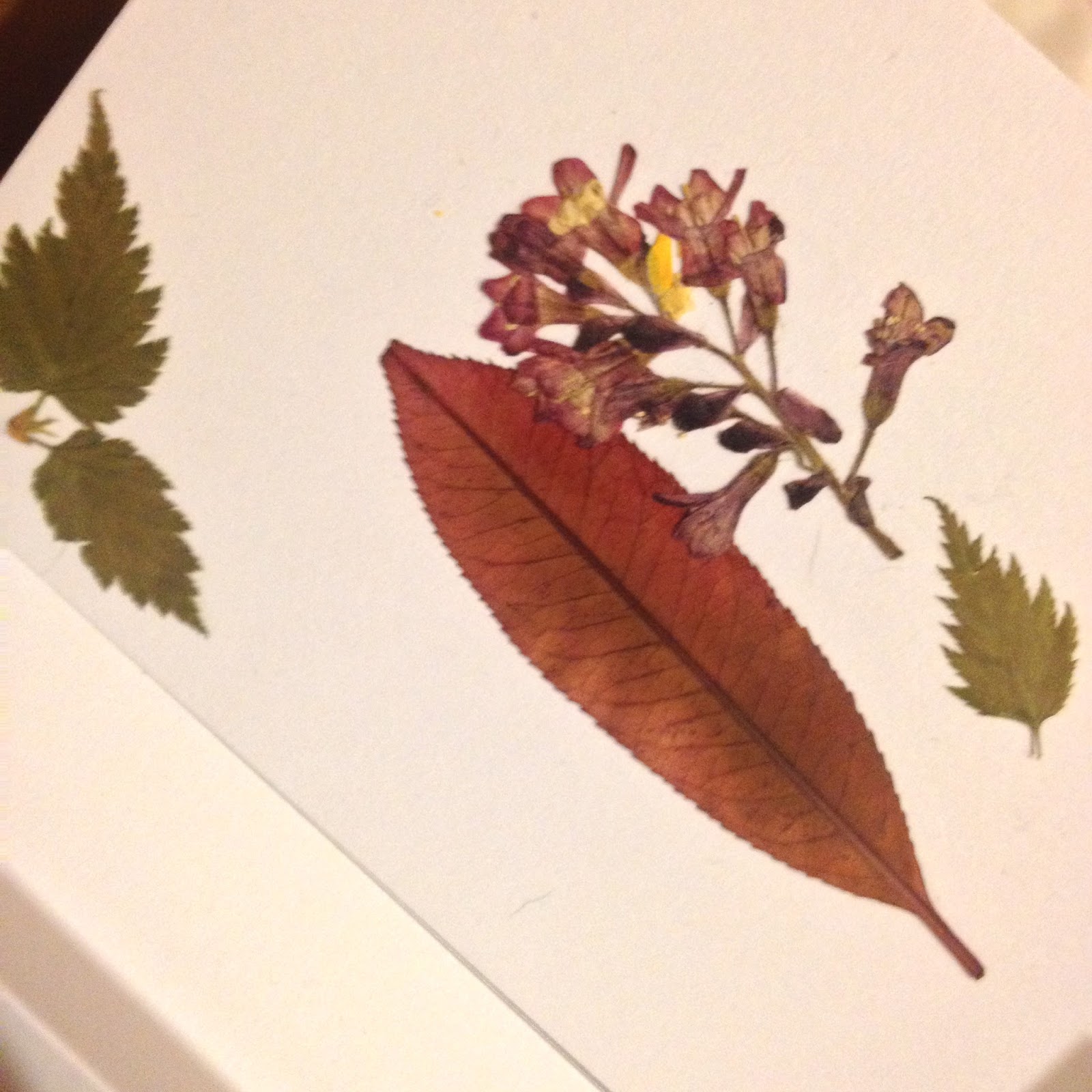
Yesterday was the first day of Spring! It wasn't a great day but today's sun has made up for it. I love Spring, firstly its the season of my birthday, the sun begins to shine in England and so many new beautiful flowers spring up! I love flowers, they are so pretty. The dainty wild ones and all the daffodils. It's the perfect time of year for flower pressing. 

I find flower pressing is a hobby that I enjoy but I don't spend a considerable amount of time doing, it is quite simple and doesn't require too much maintenance. The main thing is deciding what to do with the flowers and how to arrange them once pressed. I made a few cards and a bookmark using the flowers I had pressed. I braught a pack of 50 cards with envelopes from the works - £4 that's only 8p per card! You can also buy 10 for £1 if you don't want to make too many. Below is a step by step of how to make the pressed flowers cards.


Step 1 - choosing flowers

I want to emphasise that you only pick flowers you are allowed to. And if picking from a public area make sure they are only wild flowers and don't pick too many from the same area as not to spoil the scenery for other people.
When choosing flowers (or pretty leaves) you should look out for dainty flowers more than thick ones, I found daffodils do work but require more maintenance when pressing. The finer the easier to press and better they will look as when pressing you are drying them out, the thicker means the longer time it takes and more regularly you need to change paper. 

Step 2 - placing the flowers onto paper

For the pressing you can ither use a flower press (I found this one on Ebay) or you can use newspaper, blotting paper (better but not necessary to use) and books.
I used books, newspaper and blotting paper to press mine. So start with a book, then newspaper (a couple of sheets will do) and a sheet of blotting paper. Place the flowers how you want them to be pressed. Open is lovely, you will need to cut the stalk at the top of the flower or this will get in the way, you can have a look at my images of pressed flowers to get an idea how to place them or images of other pressed flowers. 
If you use the flower press a layer of corrigated card is good to use as first layer then newspaper and blotting paper.

Step 3 - paper and weight

Place another layer of blotting paper, couple pages of newspaper then another book. If you are using the flower press add the same then corrugated card (if you have) then tighten the flower press.

Step 4 - Waiting and checking
If you have pressed bigger or thick flowers/leaves these will take longer and require changing blotting paper or newspaper more often, its worth checking thicker ones every day, if it looks like its been damp then it needs changing. For the flowers I pressed I checked every 3/4 days and they were pressed by 3 weeks! 
These will last for years so don't worry about when you use them.

Step 5 - Making cards and more

You can arrange the flowers on a card to a design you like, then you can take a photo to remember arrangement or use a second card to take one flower at a time, use a glue stick on the card in the area which you are placing the flower, or you can pick up the flower with tweezers, dot some pva glue with a fine stick on the back. Place the flower and repeat this with all pressed flowers you use on the card. 


There are endless projects you can do, if you use Gloss finish Mod Podge or clear nail varnish, you can make pretty phone cases, glasses (small ones are extra cute) frame them, present tags (you can pick up blank ones from the works or hobby craft) If you place them in glass frames you can hang them by a window! 


Spring time walk collecting flowers. The tiny flowers from these trees press well and are beautiful




JoJo


Share
Tweet
Pin
Share
No comments
For a weekend catch up with my best friend, we decided to go to Cambridge for a day of shopping and seeing the city.
We decided to hit the shops and stop by Topshop, Warehouse and others. My favourite pieces of the season is anything embroidered. Bags and jeans espically! 

The city is very pretty, we stopped by Christ's college to look at the beautiful buildings and have take photos. 


 I wore my coat from Top Shop, an oversized leather dress which I brought from Top shop on Oxford street a while time ago, I decided it was a piece for longevity because it is  good quality and simple, it can be styled up or down and is leather so it is very durable! I paired this up with a cute choker from Topshop black tights and Embroidered boots (currently at Public desire!).


Buys from Topshop! A beautiful embroidered bag and satin feel nude pink frill top!


We really enjoyed our visit and will be back soon!
 For lunch we stopped by an independent cafe at Stickybeaks. We enjoyed yummy lattes and quiche, the staff were very friendly and the cafe had a home made feel to it, even the water was a vintage style glass water dispenser, we were made to feel relaxed and happy. I loved the detail to the coffees!


JoJo

Share
Tweet
Pin
Share
No comments
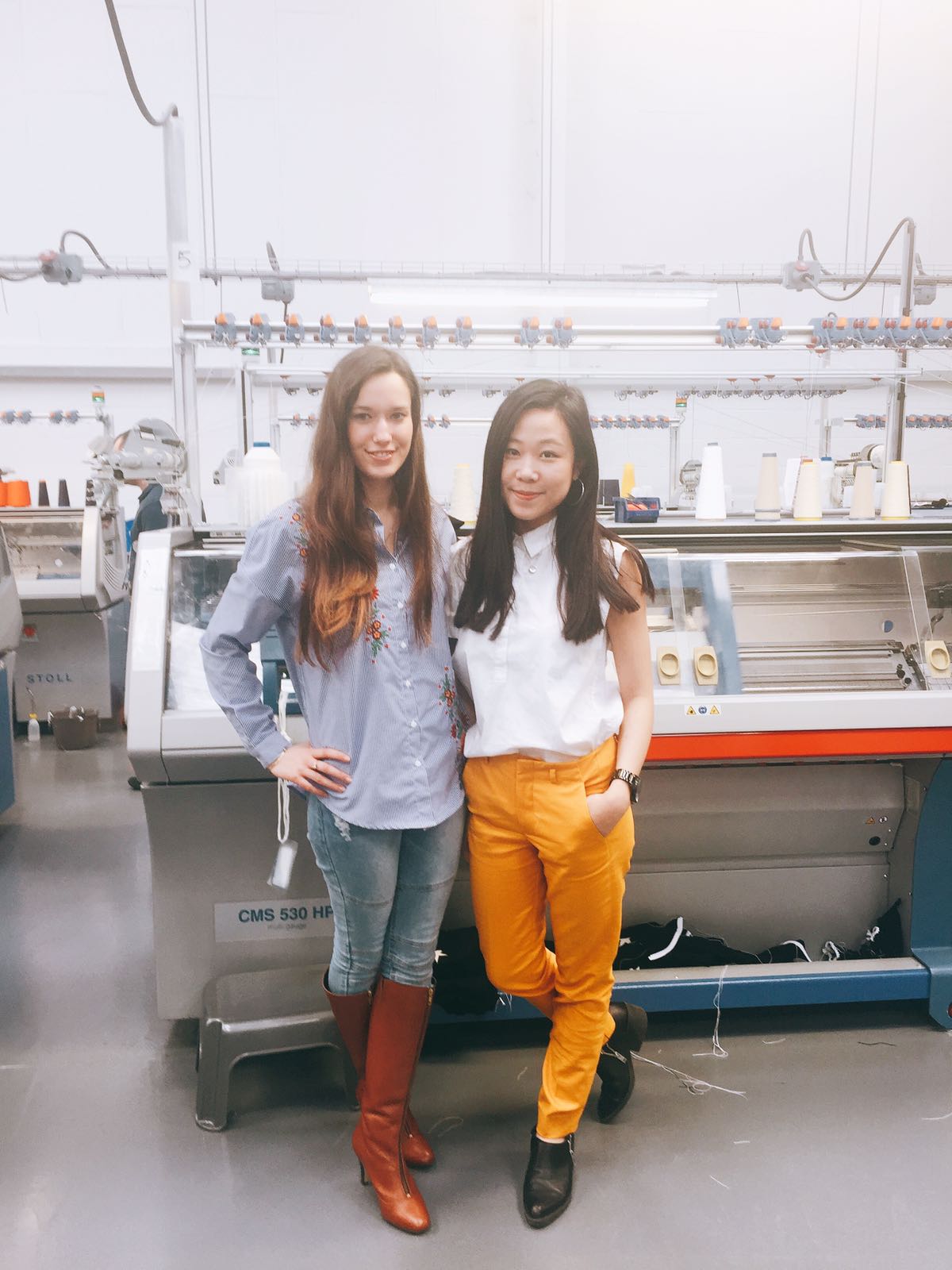
For this blog I am reflecting upon what I have learnt about the differences between two models of Stoll ( power knitting machines ) CMS 530 HP multi gage and the CMS ADF - 3

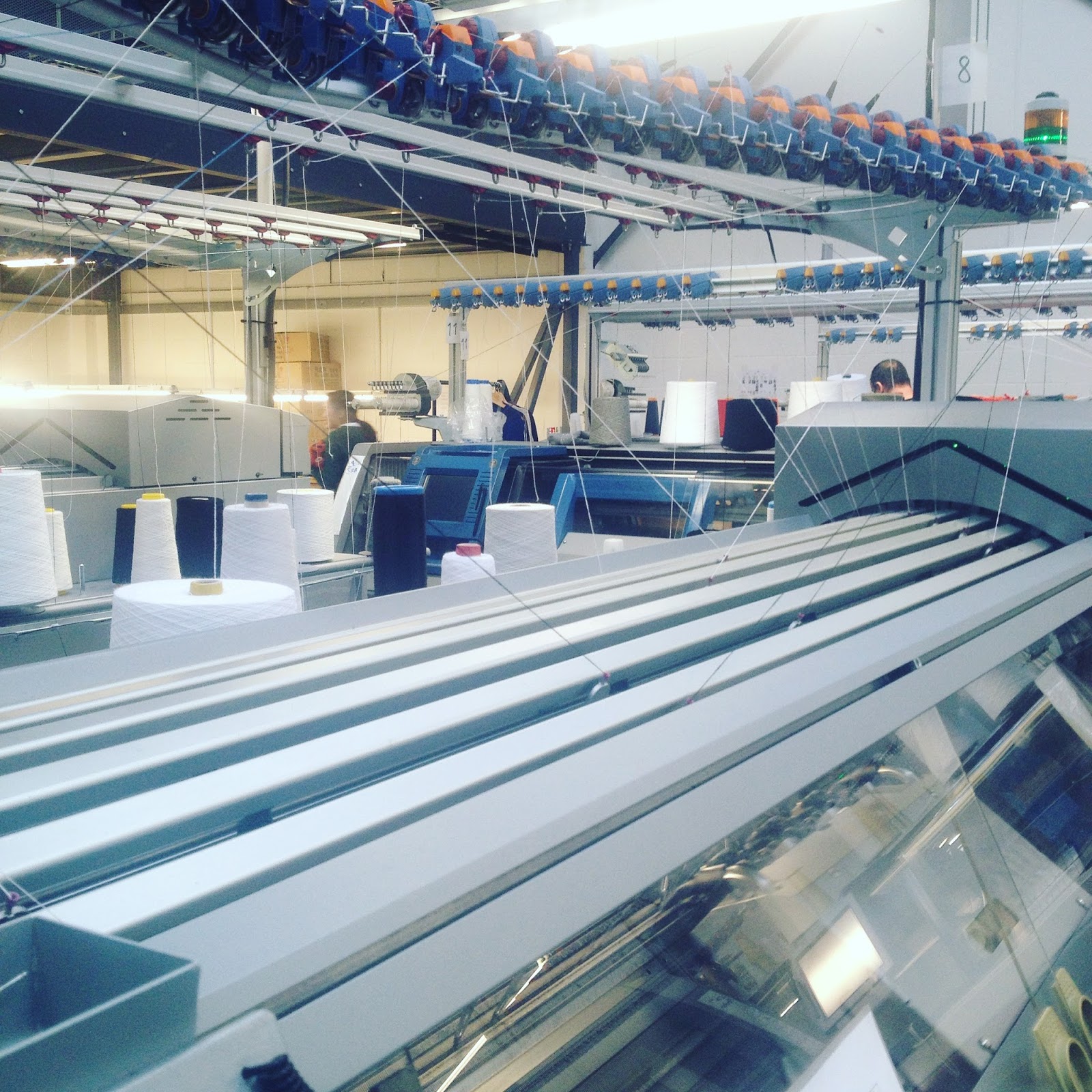
The CMS 530 HP multi gage machines work quite like a dubied in terms of how the feeders are selected and move. The carriage of the machine has an overhead which pushes the feeder holders. The carriage also transfers the needles for the fabric shape and stitch structure.


 Pictured in front of the staircase of Albion with Anson.


The CMS ADF - 3 machines are newer models which have more yarn feeders than the CMS 530 HP. The CMS ADF - 3 also feed through the top of the machine instead of through rollers on the side. For this reason the CMS ADF - 3 has sensors which tells the machine to stop if there is an obstruction. 
It also works differently in terms of selecting feeders to knit. The carriage doesn't do this, it is the bars over the machine that have motors inside that carry the feeders across the bed to knit. The carriage runs across the machine to transfer needles.


JoJo

Share
Tweet
Pin
Share
No comments
Before starting my second placement, I went on a week holiday to Lanzarote! Forget the bad reviews on the island and visit the beautiful parts of the island. We stayed in Playa Blanca and also visited the Marina for dinners. The Amura - a Michelin star restaurant is spectacular, the interior and exterior is beautiful, the building with white pillar balconies and white decor serves food beautifully presented with very pleasant waiting staff. It is a dinner to remember.
I decided it was the perfect evening to wear my beautiful Miss Selfridge dress.

The embroidery of the dress has been crafted in India, inspired by antique Japanese Kimonos. It really is a special piece that had been designed to celebrate 100 years of Vogue! The dress is super exclusive, they only had 100 pieces made.

The photograph was taken in front of a wall of volcanic rock, these walls were a feature of our villa.


JoJo

Share
Tweet
Pin
Share
No comments
For the last five months I have been on part of my placement year working for The Albion Knitting company. 
Albion knitting based in Harringay London, is a high end knitwear manufacturing company, with clients such as See by Chloe, Alexander McQueen, Givenchy and more.The company fits in the market whom want 'made in Britain' clothing and it's amazing for the designers in London to have the factory on their doorstep.
The factory's interior is more than just a factory, it is a beautifully designed interior space, the entrance of the building has a sculpted stair case using knitting needle beds on each step and connecting wire frame. The company has offered me many skills to learn and develop in all the departments including Quality controll, machine sewing, hand sewing, pressing and knitting (operating stoll machines).

I have seen stoll and Shima Seiki machines in use and have learnt to design swatches on Apex 3 at Nottingham Trent which is great for a student to have the opportunity to have designs produced on machines that are used in the industry. By choosing The Albion Knitting Company as my placement year I have learnt a great deal about the stoll machines, their maintenance and servicing, how regularly everything needs to be checked, cleaned and oiled. I have learnt how to change the machines needles and for the fabric quality importance of tension which is regularly checked and adjusted on the machines.
I have learnt how to read and resolve problems which is indicated by the orange light above each machine and will stop knitting when there is a problem.
By watching the machines I have also learned and understood more how the machines work and from this I have worked out and asked questions to understand the differences between the different knitting machine models. 


I have been gaining confidence and gaining useful skills in the industry. In this photo I have been re threading the newest model of Stoll machines.


Some days or for parts of a day I may be required to split yarns so there is more cones to ply on the machine or sometimes I ply the yarns together on the winding machine. The machine can be set by speed which I will adjust on strength and thickness of yarn. The machine will also be used for some of weaker yarns to wax. This makes the yarn stronger, when I was frame knitting I used a traditional wooden hand winding machine as all yarn needed to be waxed to be frame knitted due to the weight of the historic machines. 

It is incredible to have the opportunity to use the historic knitting frames at Frame Knitters Museum and then work at Albion Knitting company. The huge difference in the process but also in the culture, learning about the frame knitters life style, which I now compare to Albion which the workers are a combination of skilled Chinese workers and young people from London.


When reading problems on the stoll machines the operating screen will tell you the problem. There are various problems to read, most are quite explanatory and the image above is telling me that the machine cover is open.


Besides the operating screen (which will also tell me there is a problem with a feeder). A light on the feeder will tell me which feeder there is a problem. This saves quite a bit of time which can be used to look after other machines.


This Image is representing the needles on the bed and how they would sit on front and back. The latch on the side of the needle is how the needles will transfer stitches between front and back bed. For example when a rib transfers to back bed for single bed knitting the row will transfer the stitches through the latch while the carriage moves over them.


The needle bed needs to be oiled once a day to make sure the machine flows well and to keep the machine from rusting. The brushes also require a generous amount of oil as these bush under-neigh the carriage to oil the under-neigh of the carriage.


This steaming machine takes a long time to set up (I'm yet to set it up but seen it done) but it really speeds up the process. It's a very big machine and quite intimidating at first as once the garment has been steamed to the correct measurements it moves back and into a neat pile at the touch of a button.


During my time at Albion we had a visit from Shima for an introduction to the Apex 3, a programme which we use at Nottingham Trent on the Knitwear course. It can be used by both designers and programmers to realise the design and make sure it works before handing to the programmer to give less work and more chance of the garment being successfully knitted, this cuts time and costs as there are more problems being resolved before the sample is made. As you can see in the image above there are two of each sample. They looked identical. It was only when I touched the samples that I could tell one was knitted and one was only a digitally simulated sample using the Apex 3. 


In the machine sewing department I learnt how to use new industrial machines these are the button hole and button sewing machines. Normally on my own garments I have either knitted a button hole using partial technique or at university the technician will use the button hole machines and buttons will be hand sewn onto the garments. 
There are many different types of button hole stitching and adjustments to be made with scrap fabric of same or close as possible handfeel of the garment sewing onto. Then once the quality is perfect the button hole will be sewn onto the garment.


I was amazed at the speed of this machine, the button has to be in exactly the right place or the needle will hit the button and break.

I look forward to writing and sharing my next blog.
Any questions I will try to under in comments under-neigh! 


JoJo

To see more images and about the company visit their website at http://www.albionknit.london/
Share
Tweet
Pin
Share
1 comments
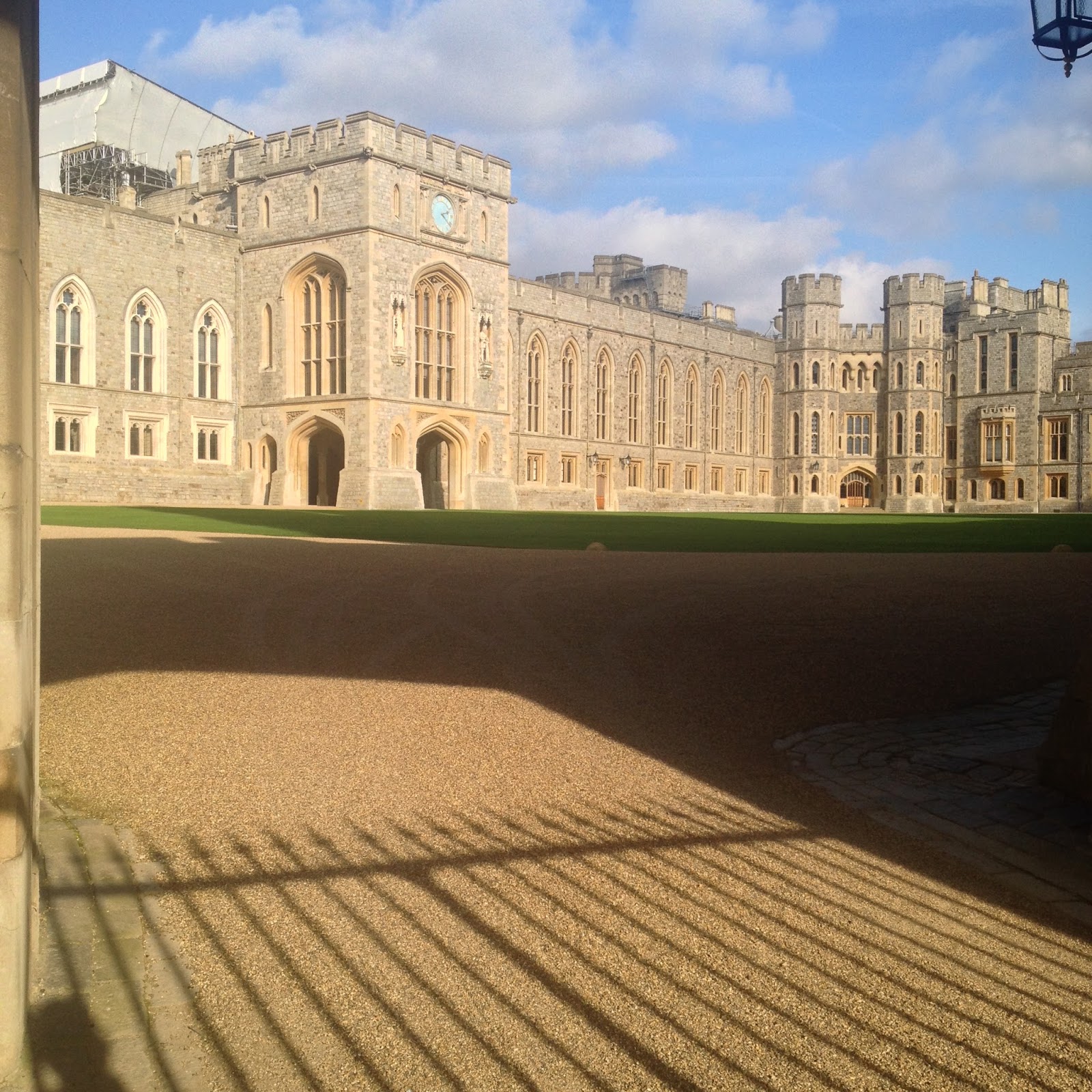
Considering I live only about an hour and a half to Windsor, I can't believe this was my first visit! 
Windsor Castle is beautiful inside and out and is a must see!
Unfortunately it is not allowed to take photographs inside however the Royal Collection website has some amazing photos of the state apartments https://www.royalcollection.org.uk/visit/windsorcastle
The exterior of the castle is incredible and you could even spend the whole day just looking around St Georges Chapel. 
The tour fee includes audio guides and I'ld defiantly recommend using them as you learn so much about The Castle and its history, what things mean and it helps you notice significant details. 
Queen Mary's doll house is also incredible and so intricate, I couldn't believe the detail, the paintings in the dolls house must have been painted with a single hair for a brush! 


See you soon!

JoJo

Share
Tweet
Pin
Share
No comments
Newer Posts
Older Posts

About me


I'm JoJo! I'm passionate about fashion, knitwear and my sausage dogs Louka and Frankie!

I absolutely love to travel, but not just for the good weather and pool. I love to explore, have and adventure and to learn new things!

Right now I have just graduated with a First Class Honours in Fashion Knitwear and Knitted Textiles from Nottingham Trent University, I also completed a placement with Julien Macdonald and the Albion Knitting Company.


Follow Us

  • Youtube
  • Facebook
  • Instagram
  • Pinterest

recent posts

Blog Archive

  • ▼  2018 (2)
    • ▼  June (2)
      • The old fortress - Corfu/Kerkeria
      • Island of Lokrum - Dubrovnik, Croatia
  • ►  2017 (8)
    • ►  September (1)
    • ►  March (6)
    • ►  February (1)
  • ►  2015 (7)
    • ►  November (2)
    • ►  October (2)
    • ►  September (3)
Instagram Facebook Youtube Pinterest
FOLLOW ME @INSTAGRAM

Created with by BeautyTemplates | Distributed By Gooyaabi Templates